Thesis
The Dialogues stage at Google I/O 2026 marks a decisive turn from isolated AI showcases to a coordinated AI experience that threads through Google’s productivity suite, hybrid‑meeting tools, and subscription models. The company is no longer just adding AI features; it is weaving a single, consistent intelligence layer into the fabric of everyday work.
Evidence
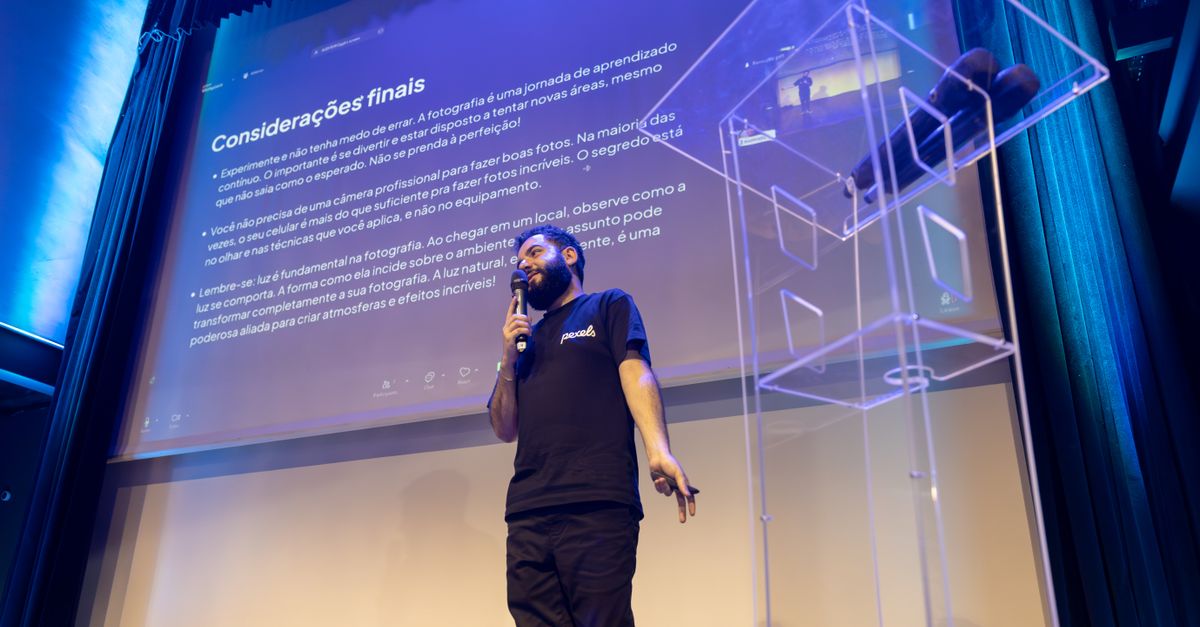
According to the Google AI Blog recap of the Dialogues stage, leaders on the stage examined the future of artificial intelligence, quantum computing, robotics and creativity (https://blog.google/innovation-and-ai/technology/ai/io-2026-dialogues-recap/). The breadth of topics—ranging from raw computational power to artistic expression—suggests Google intends to apply AI uniformly across very different domains.
That intent appears in concrete product updates announced the same week. The Google Beam experiment, described in a May 20 post, lets participants see and hear colleagues at true‑to‑life size and sound, turning hybrid meetings into a more inclusive experience (https://blog.google/innovation-and-ai/models-and-research/google-research/google-beam-group-meetings/). By embedding realistic audio‑visual rendering directly into the meeting platform, Google is extending AI‑driven perception beyond a single app.
On May 19, Google announced new voice capabilities in Gmail, Docs and Keep, a fresh design tool called Google Pics, and upgrades to AI Inbox (https://blog.google/products-and-platforms/products/workspace/workspace-updates/). Voice‑first interaction, generative image creation, and smarter inbox sorting all rely on the same underlying language and vision models, reinforcing the thesis of a shared AI core.
That same day, the company unveiled an AI Ultra subscription plan priced at $100 per month, alongside refreshed benefits for Google AI Plus and Pro tiers (https://blog.google/products-and-platforms/products/google-one/google-ai-subscriptions/). By packaging advanced AI features—such as higher‑quota generative models and priority access—into a tiered subscription, Google is positioning AI as a service that scales with user needs, whether personal or enterprise.
Context
Google’s AI push has accelerated since the launch of Gemini models in 2023, but most releases were still siloed: a new chatbot here, a better search algorithm there. Competitors have taken a similar route, offering AI add‑ons to existing products without a clear unifying strategy. The Dialogues stage, however, gathered voices from different research groups under one roof, hinting at a deliberate alignment.
Historically, Google I/O has been a venue for unveiling hardware, Android updates, and occasional AI demos. In 2024 the company highlighted AI‑assisted photo editing; in 2025 it showcased a prototype robot for warehouse tasks. The 2026 Dialogues agenda expanded that narrative, explicitly linking AI progress to quantum computing breakthroughs and creative workflows, suggesting the next wave will be less about novelty and more about integration.
Counter‑Arguments
Critics argue that bundling AI across so many services could dilute focus and raise privacy concerns. A unified model that powers email, meetings, and design must ingest a wide array of personal data, prompting questions about data stewardship. Moreover, the $100 AI Ultra price may alienate small teams that cannot afford premium tiers, potentially widening the gap between large enterprises and independent creators.
Another objection points to the competitive pressure from Microsoft’s Copilot and OpenAI’s suite of APIs, which already offer cross‑product AI experiences. Google’s approach may be seen as reactive rather than visionary, especially if the promised integration does not translate into measurable productivity gains.
Prediction
If the Dialogues stage is a reliable barometer, the next twelve months will see Google rolling out a single AI backbone that powers Gmail, Docs, Beam, and the new Google Pics tool with consistent updates. Expect tighter coupling between quantum‑ready workloads and everyday features—perhaps AI‑generated quantum circuit suggestions embedded in research notebooks.
Subscription tiers will likely become the primary revenue stream for these capabilities. The AI Ultra plan may expand to include exclusive access to early‑stage quantum APIs and priority support for robotics developers, turning the subscription model into a gateway for advanced experimentation.
In short, Google is betting that an end‑to‑end AI experience—delivered through familiar tools and a clear pricing ladder—will become the default expectation for both individual users and large organizations.
📎 Related Articles
Google I/O 2026 Dialogues Reveal an AI‑First Office • Google I/O 2026 Dialogues: Why the Talk Matters More Than the Tech • Google’s Missouri Investment Aims to Rewrite the State’s AI Future • Google I/O 2026 rolls out 100 new tools and services • Google I/O 2026 Dialogues: Why AI Integration Is Now an Expectation, Not a Feature • Google I/O 2026 Dialogues Stage Recap: AI, Quantum, Robotics Highlights • Google I/O 2026 Dialogues vs Product Announcements: Which Stands Out? • Dialogues Stage vs Google AI Products I/O 2026: Which Has More Impact?